



A well-designed Multi-Use Games Area (MUGA) needs fencing that can withstand regular use, contain balls within the playing area and provide a practical boundary for the sports taking place. From school playgrounds and community sports facilities to dedicated football, tennis and basketball courts, selecting the right fencing system plays an important role in how a facility performs over time.
However, not every MUGA has the same requirements. A football court used throughout the day will place different demands on its fencing than a tennis court or a multi-sport facility incorporating goals, spectator areas and other equipment. Factors such as ball impact, rebound behaviour, fence height, visibility and access all influence which system is most appropriate.
At Corden Perimeter Systems, we supply a range of fencing solutions for sports and recreational environments, including 868 Twin Wire Panel Systems, 868 Twin Wire Sport Rebound, MUGA Goal Ends, Spectator Rail and Chainlink fencing. Understanding the differences between these systems can help contractors, installers and project specifiers select the most appropriate solution for their project.
What is MUGA fencing?
MUGA fencing is perimeter fencing used to enclose Multi-Use Games Areas, where one space may accommodate several sports, including football, basketball, netball and tennis.
Unlike conventional boundary fencing, MUGA fencing needs to account for the movement of balls, player activity and the practical requirements of the sports being played. Depending on the facility, it may also need to withstand frequent ball contact, provide controlled access and maintain clear visibility into the playing area.
The fencing system should therefore be selected around the intended use of the court rather than simply choosing a standard perimeter fencing product.
What types of fencing are suitable for MUGAs?
There are several fencing systems suited to sports courts and MUGAs, each offering different benefits depending on the activities taking place.
868 Twin Wire Panel System: A robust option for general MUGA fencing
Best suited to: Schools, community sports facilities, multi-use courts and general recreational sports areas.
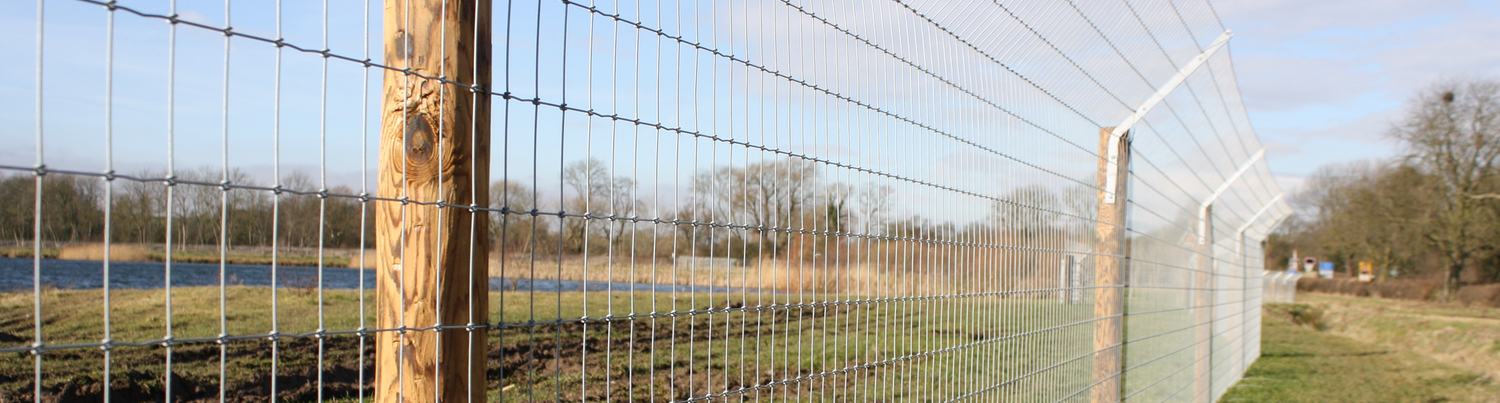
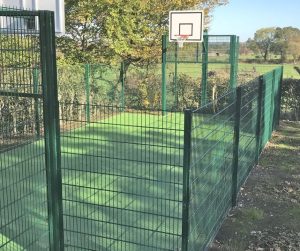
868 Twin Wire fencing is a rigid welded mesh system featuring two horizontal wires and one vertical wire. This construction provides a robust physical boundary while maintaining visibility into and out of the playing area.
For general MUGA applications, 868 Twin Wire is a practical choice where strength, durability and a clearly defined perimeter are important. Its rigid construction makes it suitable for sports facilities that experience regular use, while the open mesh design allows teachers, coaches and spectators to see through the enclosure.
The system can form the main perimeter fencing around a multi-use sports court, with other specialist components incorporated where particular activities require them.
868 Twin Wire Sport Rebound: Designed for active playing areas
Best suited to: Football, five-a-side, basketball and multi-sport courts where the fencing is regularly exposed to ball contact.
While standard 868 Twin Wire provides a robust enclosure, some sports facilities require fencing specifically configured for areas where balls frequently strike the perimeter.
868 Twin Wire Sport Rebound combines the rigidity of twin-wire mesh with a sports-focused configuration intended for ball-contact areas.
This makes it particularly relevant for football and five-a-side courts, where the fencing may be used as part of the playing environment, as well as basketball and other multi-sport facilities.
When specifying a sports court, it is important to consider how frequently the ball will come into contact with the fencing and whether a dedicated rebound system would be more appropriate than a standard perimeter panel.
MUGA Goal Ends: Creating a versatile multi-sport playing area
Best suited to: Multi-use games areas incorporating goals and other sporting equipment.
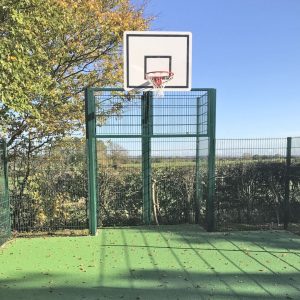
MUGA Goal Ends provide a dedicated sports component within the wider fencing arrangement, allowing the playing area to accommodate different activities.
Although football is a common use for MUGA goal ends, these systems are not limited to football pitches. The goal-end arrangement can form part of a broader multi-sport court design, with the configuration selected around the sports and equipment required.
For schools and community facilities, where a single court may be used for several activities throughout the week, this flexibility is particularly valuable.
MUGA Goal Ends can be incorporated alongside the principal fencing system to create a more functional playing environment without restricting the facility to one sport.
Spectator Rail: Separating playing areas from surrounding spaces
Best suited to: Pitch-side boundaries, spectator zones, touchlines and circulation areas.
Not every part of a sports facility requires full-height mesh fencing. In areas where ball containment is not the primary requirement, Spectator Rail provides a practical way to establish a boundary between the playing area and surrounding spaces.
This can be particularly useful for sports facilities with designated viewing areas or circulation routes, where people need to be separated from the court or pitch without creating a fully enclosed environment.
Spectator Rail can be used alongside the main MUGA fencing system to provide a clearly defined boundary while maintaining an open feel around the facility.
It is important to distinguish between a spectator boundary and a ball-containment fence, however. Spectator Rail should not be treated as a replacement for full-height sports fencing where ball containment is required.
Chainlink fencing: A flexible solution for tennis courts
Best suited to: Tennis courts, traditional recreational courts and sports facilities where reduced ball rebound is desirable.
Chainlink fencing remains a relevant option for sports facilities, particularly tennis courts, where the behaviour of the ball when it strikes the fence is an important consideration.
Unlike rigid welded mesh panels, Chainlink has a flexible construction that allows it to absorb some of the energy from ball impact.
This reduces the energy returned by the fence, allowing the ball to drop towards the court surface rather than bouncing strongly back into the playing area.
For tennis courts, where a predictable playing environment and effective ball containment are important, this characteristic makes Chainlink a particularly suitable option.
It can also be considered for recreational courts, refurbishment projects and existing sports facilities where a flexible mesh enclosure is preferred.
Which MUGA fencing is best for different sports?
The activities taking place within a sports facility should be one of the first considerations when selecting a fencing system.
| Sport or application | Fencing to consider | Main considerations |
| Football and five-a-side | 868 Twin Wire Sport Rebound, MUGA Goal Ends | Frequent ball contact, rebound requirements and goal arrangements |
| Basketball | 868 Twin Wire Sport Rebound | Ball impact, durability and visibility |
| Tennis | Chainlink | Ball containment and reduced rebound from the fence |
| Netball and general multi-sport courts | 868 Twin Wire Panel System, with specialist components where required | Court layout, ball containment and flexibility |
| School and community MUGAs | 868 Twin Wire Panel System, MUGA Goal Ends | Multiple sports, regular use and practical court design |
| Spectator and pitch-side areas | Spectator Rail | Separation of spectators and circulation areas from the playing space |
These recommendations provide a starting point rather than a fixed specification. The most appropriate system will depend on the sports being played, the expected level of use and the overall design of the facility.
What should you consider when choosing MUGA fencing?
Fence height and ball containment
The height of sports court fencing should reflect the activities taking place and the surrounding environment.
For example, football courts may require additional ball containment behind goal areas, while tennis courts need suitable fencing around the baselines and sidelines.
The position of the court in relation to nearby buildings, roads, pedestrian areas and other facilities should also be considered.
Some MUGAs may benefit from different fence heights around the perimeter, depending on where balls are most likely to leave the playing area.
Ball impact and rebound behaviour
One of the most important considerations when specifying sports fencing is how the fence responds to repeated ball contact.
For football, five-a-side and other sports where the ball regularly reaches the perimeter, a dedicated system such as 868 Twin Wire Sport Rebound may be appropriate.
For tennis, the requirements are different. Chainlink fencing provides a more flexible enclosure that absorbs some of the energy from ball impact, helping the ball drop towards the court rather than rebounding strongly into play.
Understanding these differences helps ensure the selected fencing supports the intended use of the facility.
Multi-sport flexibility
Many school and community MUGAs are designed to accommodate several activities within the same space.
This means the fencing specification needs to consider more than one sport, particularly where goals, basketball equipment or other sporting features are incorporated into the court.
Combining a principal fencing system with specialist components such as MUGA Goal Ends can help create a more versatile playing area.
Visibility and supervision
Good visibility is particularly important for school and community sports facilities, where teachers, coaches and facility managers may need to supervise activities taking place within the enclosure.
Open mesh systems such as 868 Twin Wire and Chainlink allow visibility through the perimeter without creating a solid visual barrier.
The position of entrances, surrounding pedestrian routes and spectator areas should also be considered when planning the overall layout.
Gates and access
Gates should be considered as part of the original sports fencing design rather than added once the perimeter has been specified.
Their location, width and opening arrangements need to accommodate the intended users, maintenance requirements and any relevant accessibility or emergency access provisions.
For facilities used by schools or community groups, the ability to manage access outside operating hours may also be an important consideration.
Durability and long-term maintenance
Sports facilities can experience intensive use, particularly where courts are used for school lessons, organised sport and community activities throughout the day.
The durability of the mesh, posts, fixings and protective finishes should therefore be considered as part of the overall specification.
Selecting a system designed for the expected level of activity can help reduce the likelihood of avoidable damage, ongoing repairs and premature replacement.
Is Twin Wire fencing the best choice for a MUGA?
For many general MUGA applications, 868 Twin Wire is a strong choice because it provides a rigid, durable enclosure with good visibility.
However, the most appropriate fencing system depends on how the court will be used.
Where football, five-a-side or basketball involves regular ball contact with the perimeter, 868 Twin Wire Sport Rebound may be more suitable. For tennis courts, Chainlink offers a different benefit through its ability to absorb ball impact and reduce rebound.
Facilities incorporating multiple sports may also require dedicated MUGA Goal Ends, while Spectator Rail can provide separation around pitch-side areas without the need for full-height fencing throughout.
Rather than relying on one fencing product for every application, a well-considered MUGA design may incorporate several complementary systems.
Choosing the right MUGA fencing with Corden Perimeter Systems
Selecting the right fencing for a Multi-Use Games Area starts with understanding how the facility will be used, the sports it needs to accommodate and the demands placed on different parts of the enclosure.
At Corden Perimeter Systems, our sports fencing range includes 868 Twin Wire Panel Systems, 868 Twin Wire Sport Rebound, MUGA Goal Ends, Spectator Rail and Chainlink fencing, providing options for general sports court enclosures, specialist ball-contact areas and surrounding spectator spaces.
For contractors, installers and project specifiers, considering the complete fencing arrangement from the outset can help create a practical, durable and versatile sports facility.
Planning a MUGA or sports court fencing project?
Explore the sports fencing solutions available from Corden Perimeter Systems or contact our team to discuss the requirements of your project and identify suitable fencing products.